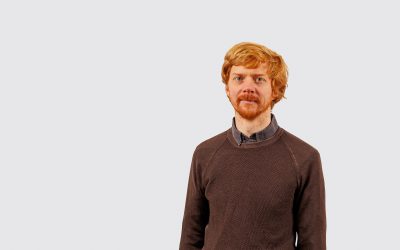
Dr. Tadej Novak
In recent years, the amount of data collected in the ATLAS experiment at the Large Hadron Collider has doubled. At the same time, computational methods and machine learning methods have also advanced rapidly, enabling the use of the latest technologies to analyse this...
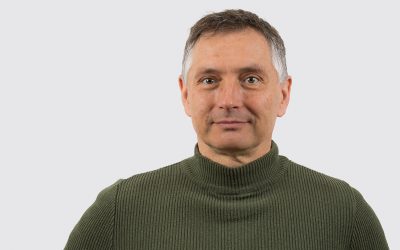
Prof. Dr. Irena Drevenšek Olenik
Organic ferroelectric thin films combine ferroelectric functionality with the key advantages of organic materials. This makes them highly attractive for next-generation electronic and electromechanical elements in devices that are flexible, lightweight, and...
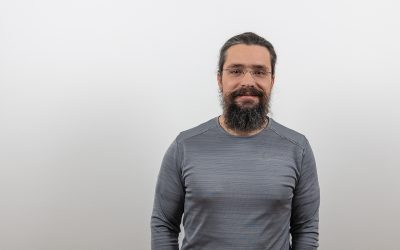
Prof. Dr. Vid Bobnar
At the Laboratory for dielectric spectroscopy (Department of condensed matter physics) of the Jožef Stefan Institute, a position for a young researcher (PhD candidate) will be open starting in October 2026. The main focus of the research training will be the...
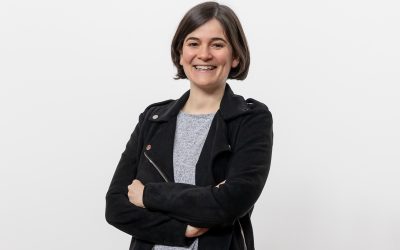
Asst. Prof. Dr. Matjaž Gomilšek
Assoc. Prof. Dr. Gregor Primc
The research program “Thin films and plasma-surface engineering” is among the largest Slovenian programs in technical sciences, currently involving about 20 researchers and 10 young researchers, technicians, or engineers. It is renowned worldwide for its scientific...
Prof. Dr. Rok Zaplotnik
Our research focuses on plasma characterization using catalytic probes, optical emission spectroscopy, VUV spectroscopy, laser absorption spectroscopy, and mass spectrometry. We design and construct all of our plasma systems. We work with RF, MW and pulsed DC...
Dr. Boštjan Jenčič
Prof. Dr. Matjaž Kavčič
High energy resolution X-ray emission spectroscopy (XES), probing the valence occupied electronic states below the Fermi level, can be used to provide information on local electronic structure and bonding configuration of atoms within different technologically...
Asst. Prof. Miha Mihovilovič
Prof. Dr. Simon Širca
Dr. Jan Rozman
About the Programme The PhD candidate will join the Biophysics Group at the Department of Theoretical Physics (F-1), which focuses on understanding the physics of biological processes at both the tissue and molecular scales. The group also has an extensive network of...
Asst. Prof. Dr. Jure Kokalj
Prof. Dr. Nejc Košnik
Prof. Dr. Borut Bajc
By holography we usually mean the connection between conformal quantum field theories in d-spacetime dimensions with classical solutions of gravitational theories on the (d+1)-dimensional spacetime with negative curvature. They represent weak-strong dualities, and are...
Prof. Dr. Robert Jeraj
1. Environmental medical physics 2. Screening programs
Dr. Klemen Ambrožič
Assist. Prof. Dr. Andraž Rešetič
Liquid crystal elastomers (LCEs) are a material that combines the self-ordering properties of liquid crystals with the elasticity of a polymer network. The result is an elastic material that can reversibly change shape in response to an external stimulus, such as...
Prof. Dr. Miha Škarabot
Asst. Prof. Dr. Andrej Vilfan
Asst. Prof. Dr. Tomaž Rejec
The candidate will explore the symmetry and the topological properties of multi-terminal Josephson junctions with the aim of identifying those in which new synthetic topological materials could be realized. He will also explore ways to use such junctions as useful...
Dr. Denis Golež
The doctoral candidate will develop a quantum theory for the strong light-matter coupling in many-body quantum systems, such as a density charge wave or exciton insulators, in a cavity with a confined electromagnetic field.
Prof. Dr. Rok Pestotnik
The Jožef Stefan Institute has recently become a full member of the LHCb collaboration at CERN. LHCb is a specialised spectrometer for studying hadrons containing heavy quarks (b and c), enabling precise measurements of CP violation, rare decays, and searches for...
Dr. Tilen Koklič
Dr. Venkata Subba Rao Jampani
Liquid crystals (LCs) are common in every household as display devices and are also widely used in scientific research as various optical components such as spatial light modulators, optical lenses, and sensors. The key characteristic of the high responsiveness of LCs...
Prof. Dr. Luka Snoj
Dr. Aljaž Čufar
Dr. Nerea Sebastian Ugarteche
Ferroelectric nematics, recently discovered, exhibit spontaneous polarization and nonlinear optical properties comparable to ferroelectric solids, while being fluid. This unique combination of fluidity, i.e. tunability and processability, and polarity unlocks exciting...
Asst. Prof. Dr. Tomaž Mertelj
Nonequilibrium quantum phenomena are a rapidly developing field of research, both experiment and theory. They arise in very different areas of physics, ranging from electronic quantum materials and magnetism to cosmology, with similar concepts arising in their...
Dr. Peter Jeglič
Quantum technologies are based on exploiting the principles of quantum mechanics to develop advanced devices such as quantum computers, communication systems, and sensors. To fully realize their potential, it is essential to achieve reliable transmission and exchange...
Prof. Dr. Zdravko Kutnjak
Dr. Rok Podlipec
In Humar Lab (Lab for Biophotonics, Soft Photonics and Quantum Optics), we develop and pioneer advanced photonics and quantum optics concepts for applications in biological and soft-matter systems. Within the biological studies that will also shape the research focus...
Asst. Prof. Dr. Iztok Urbančič
What do we do? We know that living in polluted environment poses a great risk for our health, increasing the probability for cancer, pulmonary and cardiovascular conditions, as well as neurodegeneration, but the steps of disease development remain largely unknown. In...
Prof. Dr. Igor Serša
In the Laboratory for Magnetic Resonance Imaging of the Department of Solid-State Physics (F-5), we are looking for an interested young researcher for research in the field of magnetic resonance imaging of materials. More precisely, planned research includes high...